
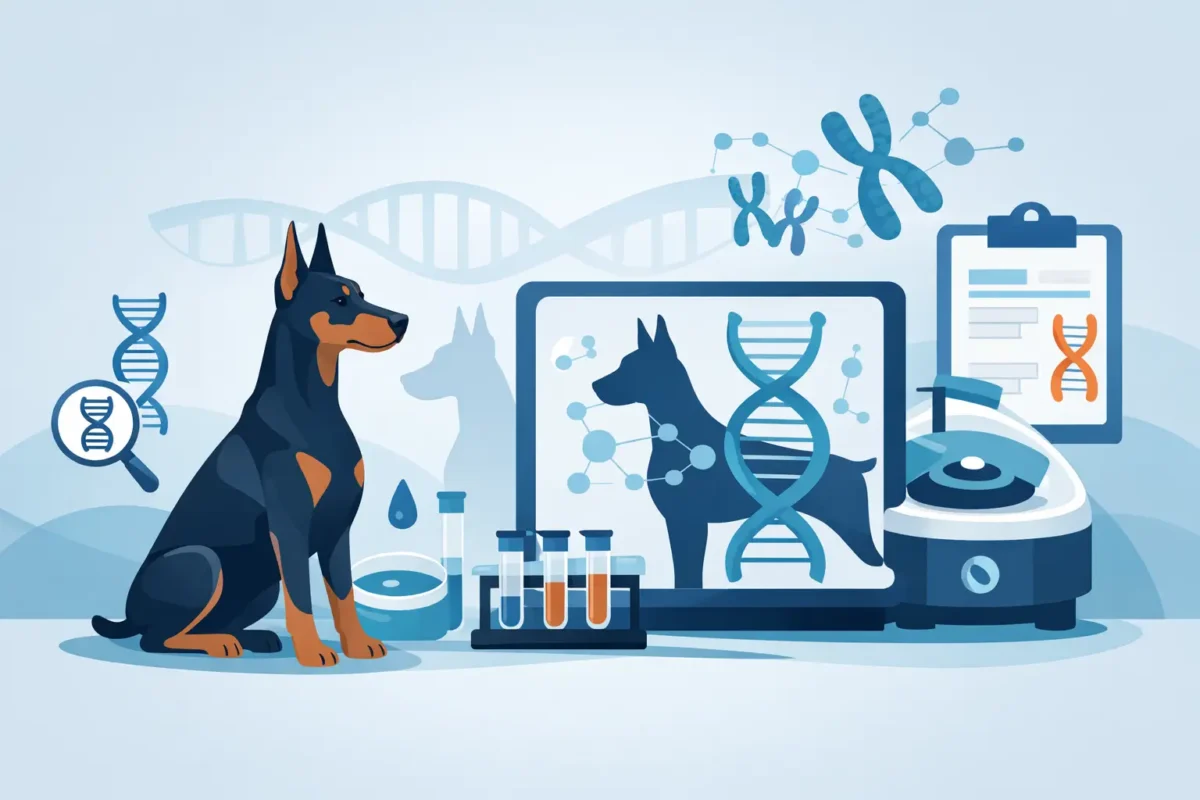
A Doberman can look exceptional on paper and still carry risks you cannot see in a pedigree alone. That is why genetic testing for Dobermans matters so much. For families investing in a loyal protector and devoted companion, and for breeders committed to preserving the breed, testing is not a luxury – it is part of responsible decision-making.
The Doberman is a remarkable breed. Elegant, athletic, intelligent, and deeply devoted, this dog was built for both companionship and purpose. But anyone serious about Dobermans also knows the breed has inherited health concerns that deserve attention. Strong bloodlines and AKC registration matter. Structure matters. Temperament matters. Health screening matters just as much.
Why genetic testing for Dobermans matters
When people hear the phrase genetic testing, they sometimes assume it gives a perfect prediction of a dog’s future health. It does not. What it does offer is valuable information. That information helps breeders make better pairing decisions and helps buyers ask better questions before bringing home a puppy.
In Dobermans, certain inherited conditions can affect quality of life, long-term care costs, and emotional peace of mind. Testing can identify whether a dog is clear, a carrier, or at higher risk for specific genetic issues. That distinction matters because not every positive result means a dog will become sick, and not every clear result means a dog is guaranteed to avoid all disease. Genetics is a major piece of the picture, but it is still one piece.
A breeder who takes health seriously does not rely on appearance, reputation, or hopeful assumptions. They use testing as one of several tools to protect the breed and produce puppies with the best possible start.
What genetic tests are commonly used in Dobermans?
The most recognized conversation around Dobermans often centers on inherited disease risk. Depending on the line and the breeder’s program, genetic screening may include tests tied to conditions seen within the breed, including von Willebrand’s disease and other inherited concerns that can affect health planning.
von Willebrand’s disease, often called vWD, is one of the best-known genetic issues in Dobermans. It affects blood clotting. A DNA test can show whether a dog is genetically clear, a carrier, or affected. That does not mean every affected dog will have the same clinical symptoms, but it gives breeders important information when planning pairings.
Another area of concern in the breed is DCM, or dilated cardiomyopathy. This one requires careful wording because it highlights the limits of testing. There are genetic markers associated with DCM in Dobermans, but a DNA result alone cannot fully predict whether a dog will or will not develop the disease. That means a serious breeder does not stop at a cheek swab. Cardiac screening, ongoing monitoring, and honest record-keeping are all part of the larger health picture.
Some breeders also test for additional inherited traits or disorders depending on the dogs in their program. The right panel can vary. A thoughtful breeder chooses tests based on breed relevance, family history, and practical breeding value, not just because a long list looks impressive.
Genetic testing is not the same as complete health screening
This is where many puppy buyers get confused. A breeder may say their dogs are genetically tested, and buyers assume that means every major health concern has been ruled out. That is not how it works.
Genetic testing looks at known inherited markers. Health screening can include much more, such as cardiac evaluation, thyroid checks, orthopedic review, eye exams, and general veterinary assessment. In Dobermans, especially, the distinction matters. Some of the breed’s most serious issues require active screening over time, not just one DNA panel done once.
So when evaluating a breeder, ask a simple question: what testing has been done, and what does each test actually tell us? A confident, responsible breeder should be able to explain that clearly.
How breeders use results responsibly
Good breeding is rarely about chasing a perfect dog, because no line is perfect. It is about making informed, disciplined choices that strengthen the breed over time. Genetic testing helps responsible breeders avoid risky pairings, reduce the likelihood of producing preventable inherited problems, and preserve valuable bloodlines without breeding blindly.
For example, a carrier dog is not automatically a dog that should be removed from a breeding program. In some cases, removing every carrier from a breed with a limited gene pool can create new problems. A more responsible approach may be to pair carefully, retain genetic diversity, and make decisions based on the full dog – health, structure, temperament, pedigree, and test results together.
That kind of judgment is what separates a serious breeder from someone simply producing puppies. It also gives buyers more confidence that planning went into the litter beyond color, size, or sales appeal.
What puppy buyers should ask about genetic testing for Dobermans
If you are searching for a Doberman puppy, genetic testing should be part of your conversation with the breeder, but it should not be the only conversation. Ask which parent dogs were tested, what conditions were included, and whether the breeder can explain the meaning of the results in plain English.
It is also fair to ask how those results influenced the breeding. A breeder who knows the breed well should be able to tell you why a pairing made sense, where strengths lie in the pedigree, and what they are doing to protect health and temperament. If the answer is vague, defensive, or built on marketing phrases alone, that is a concern.
You should also ask about non-DNA health screening. In Dobermans, this is especially important. A breeder focused on long-term breed quality understands that a healthy puppy starts with much more than registration papers and a clean-looking kennel.
Why testing supports temperament and trust
Many buyers start their search focused on appearance or pedigree titles, then shift their attention to health once they begin learning about the breed. That is a smart move. A Doberman’s value as a family companion, working prospect, or personal protection dog depends heavily on soundness.
Health and temperament are not separate ideas in practice. A dog that is physically compromised may struggle in training, household adjustment, endurance, or confidence. While genetic testing does not measure temperament directly, it supports the larger goal of producing stable, capable dogs by reducing avoidable inherited burden where possible.
This is one reason experienced, family-oriented breeders put so much emphasis on planning. At Macson’s Doberman, the goal is not simply to produce puppies. It is to raise Dobermans worthy of the breed’s reputation – devoted in the home, reliable in character, and backed by thoughtful breeding decisions.
The limits of genetic testing and why honesty matters
There is no ethical way to discuss this topic without being clear about limitations. Genetic testing is powerful, but it is not a guarantee of perfection. A puppy from tested parents can still face health issues later in life. A dog with an imperfect result may still live a full and healthy life. That is why honest breeders avoid exaggerated promises.
What testing does provide is a stronger foundation. It reduces guesswork. It shows the breeder is paying attention. It demonstrates that health is being approached with discipline rather than hope. For buyers, that kind of transparency matters almost as much as the test itself.
The best breeders do not treat health screening as a sales slogan. They treat it as part of stewardship. In a breed as noble and demanding as the Doberman, that mindset matters.
Choosing a breeder who takes the breed seriously
If you are comparing breeders, do not just look for the words health tested on a website. Look for substance behind the claim. A serious Doberman breeder should be able to talk confidently about genetics, explain how testing fits into their breeding program, and show that they care about the life of the dog long after the puppy goes home.
That level of care usually shows up in other places too – limited litters, strong socialization, attention to structure, stable temperament, contracts, guidance, and ongoing support. Genetic testing belongs in that larger picture. It is one marker of responsibility, not the only one.
For families who want a Doberman with the best possible start, this is the right standard to hold. Ask hard questions. Expect clear answers. A breeder who truly loves the breed will respect that, because protecting the future of the Doberman starts well before a puppy is ever placed in your arms.
A well-bred Doberman should offer more than presence and pedigree. It should offer confidence in the care, planning, and integrity behind that puppy’s beginning.
