The difference between a working line vs show line doberman becomes very clear once you live with one. On paper, both are Doberman Pinschers. In daily life, they can feel quite different in energy, intensity, structure, and what they ask from their owner. That matters if you are choosing a puppy for family companionship, personal protection, sport work, or the show ring.
A Doberman is never just a pretty dog. This breed was developed to be alert, loyal, athletic, and deeply connected to its people. But bloodline priorities shape how those qualities show up. Some lines are bred with strong emphasis on working ability, nerve, drive, endurance, and performance. Others are bred with a stronger focus on breed type, balanced structure, ring presence, and the polished outline many people picture when they think of an exceptional Doberman.
Working line vs show line doberman: what is the real difference?
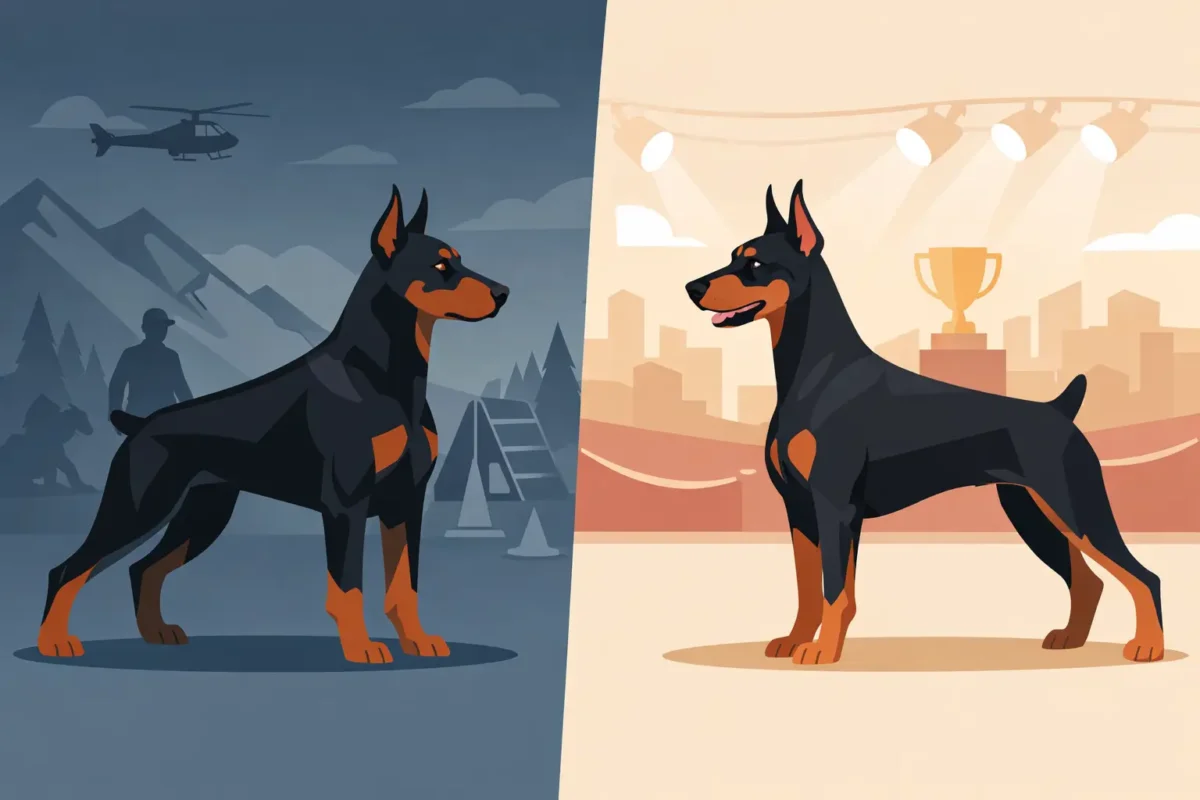
The simplest answer is breeding purpose. Working lines are generally selected to preserve and strengthen traits needed for demanding jobs and performance activities. That can include protection sports, obedience, tracking, endurance work, and real-world utility. Show lines are generally selected to produce dogs that closely match the breed standard in appearance, movement, and overall presentation while still maintaining correct Doberman temperament.
That does not mean working line dogs cannot be beautiful, and it does not mean show line dogs cannot be capable. A well-bred Doberman should still be sound, trainable, stable, and confident regardless of line. The difference is in emphasis.
A working line Doberman often brings more raw intensity. These dogs may mature with stronger prey drive, more urgency, and a greater need for structured outlets. They tend to do best with owners who enjoy training as part of daily life, not as an occasional activity.
A show line Doberman is often more recognizable for its classic silhouette, elegant head, clean movement, and balanced expression. In many cases, these dogs are bred to be easier to live with in a companion home while still holding onto the breed’s protective instinct and natural presence.
Structure, appearance, and overall type
One of the first things people notice in the working line vs show line doberman conversation is appearance. Show lines are often bred for a more refined and breed-standard look. That can include a cleaner outline, stronger consistency in head type, a more polished topline, and movement that presents well in the ring.
Working lines can look more rugged, athletic, and functional. Some have heavier bone, stronger musculature, or less of the refined finish that show breeders aim to produce. Others may look leaner and more performance-driven, with less emphasis on the visual details that catch a judge’s eye. Neither is automatically better. It depends on your goals.
For a family that wants a Doberman with the classic look many people admire, a show-oriented pedigree may be the more natural fit. For an owner focused on sport performance or high-level training, appearance may matter less than the dog’s intensity, stamina, and work ethic.
Temperament is where the choice really matters
Temperament should carry more weight than looks. A Doberman lives in your home, bonds with your family, reads your routines, and responds to your leadership every day. The wrong match in temperament can be frustrating even if the dog is gorgeous.
Working line dogs are often more demanding mentally. They may have sharper responses, stronger engagement, and a greater need for challenge. With the right owner, that can be a dream. These dogs can be deeply rewarding because they thrive on purpose and partnership. With the wrong owner, that same intensity can become difficult. Boredom, over-arousal, pushiness, and destructive habits are common when drive has nowhere to go.
Show line dogs are often chosen by families because they can offer a more moderate version of the breed. That does not mean low energy or soft temperament. A proper Doberman should still be confident, alert, and ready to protect when needed. But many show-bred dogs settle more easily in the home and fit more naturally into family routines, especially when they have been raised with thoughtful socialization.
This is where breeder selection matters as much as bloodline selection. A stable, well-socialized puppy from proven parents will usually tell you more about future success than labels alone.
Trainability, drive, and daily management
Both types are highly intelligent. Both need training. The difference is often in how much intensity comes attached to that intelligence.
A working line Doberman usually needs more than basic obedience and a backyard. These dogs often want a job. That job may be advanced obedience, scent work, protection sport foundations, structured personal protection training, or demanding athletic activity. If you enjoy that lifestyle, a working line dog can be a remarkable partner.
A show line Doberman can also excel in training, but many are more manageable for owners who want a strong family companion with reliable manners, watchdog instinct, and the ability to participate in obedience, conformation, or general activity without requiring a high-pressure working outlet every day.
This is why first-time Doberman owners should be honest about their schedule. Not their ideal schedule – their real one. If you work long hours, have young children, and want a dog that can switch off in the house, a very intense working prospect may not be the right choice. If you already train dogs seriously and want a prospect with boldness and stamina, a softer, more moderate puppy may leave you wanting more.
Working line vs show line doberman for families
For most companion homes, the better question is not which line is superior. It is which line fits your household.
A family Doberman needs a stable temperament, clear-headed confidence, strong nerves, and the ability to live closely with people. The dog should be affectionate without being unstable, protective without being unpredictable, and active without being impossible to settle.
Many families do very well with show-oriented lines because they often combine the breed’s elegant presence with a more balanced day-to-day temperament. That can be especially valuable for homes that want a loyal protector and devoted companion rather than a dog bred for high-level work.
That said, some active families with prior breed experience do exceptionally well with working lines. If the household is disciplined, engaged, and committed to training, a working line Doberman can thrive. The point is not to avoid one category. The point is to avoid choosing based on image alone.
Health, longevity, and responsible breeding
No serious Doberman discussion should focus only on looks or drive. Health matters just as much. A beautiful dog with poor health is not breeding excellence. A high-drive dog with unstable temperament is not a sound prospect.
Responsible breeders in either camp should prioritize health testing, documented pedigrees, structural soundness, and stable character. They should be able to speak clearly about the strengths and weaknesses in their program. They should also match puppies to homes carefully instead of telling every buyer that every puppy can do everything.
This is one reason families looking for AKC-registered puppies often prefer breeders who raise litters in the home, invest in early socialization, and provide lifetime guidance. At Macson’s Doberman, that breeder-to-family relationship matters because placement is never just about a sale. It is about putting the right puppy in the right home.
Which Doberman line should you choose?
Choose a working line if you want serious engagement, higher drive, and a dog bred with performance in mind – and if you are fully prepared to train and manage that potential. Choose a show line if you want the classic Doberman look, balanced structure, and a temperament that may be easier to integrate into family life while still delivering loyalty, intelligence, and presence.
But stay careful with broad assumptions. Some show line dogs are very driven. Some working line dogs are wonderfully clear and manageable. Pedigree matters. Parent temperament matters. Early raising matters. Honest breeder evaluation matters most.
The best Doberman is not the one with the most hype around its label. It is the one bred with purpose, raised with care, and matched to a home that understands what this noble breed truly needs. Choose with your eyes open, ask hard questions, and look for a breeder who values health, temperament, structure, and lifelong support as seriously as you do.
