If you are comparing the european vs american doberman, you are probably not looking for trivia. You are trying to choose the right dog for your home, your lifestyle, and your long-term expectations. That choice matters, because while both are Dobermans, the differences in structure, drive, and overall style can feel very real once that puppy grows into an adult.
For serious Doberman buyers, this is not about which type is better on paper. It is about which line is better suited to your goals. Some families want a more refined companion with strong trainability and a classic American show outline. Others want more bone, more working intensity, and the stronger old-world impression often associated with European lines. The right answer depends on what you want to live with every day.
European vs American Doberman at a glance
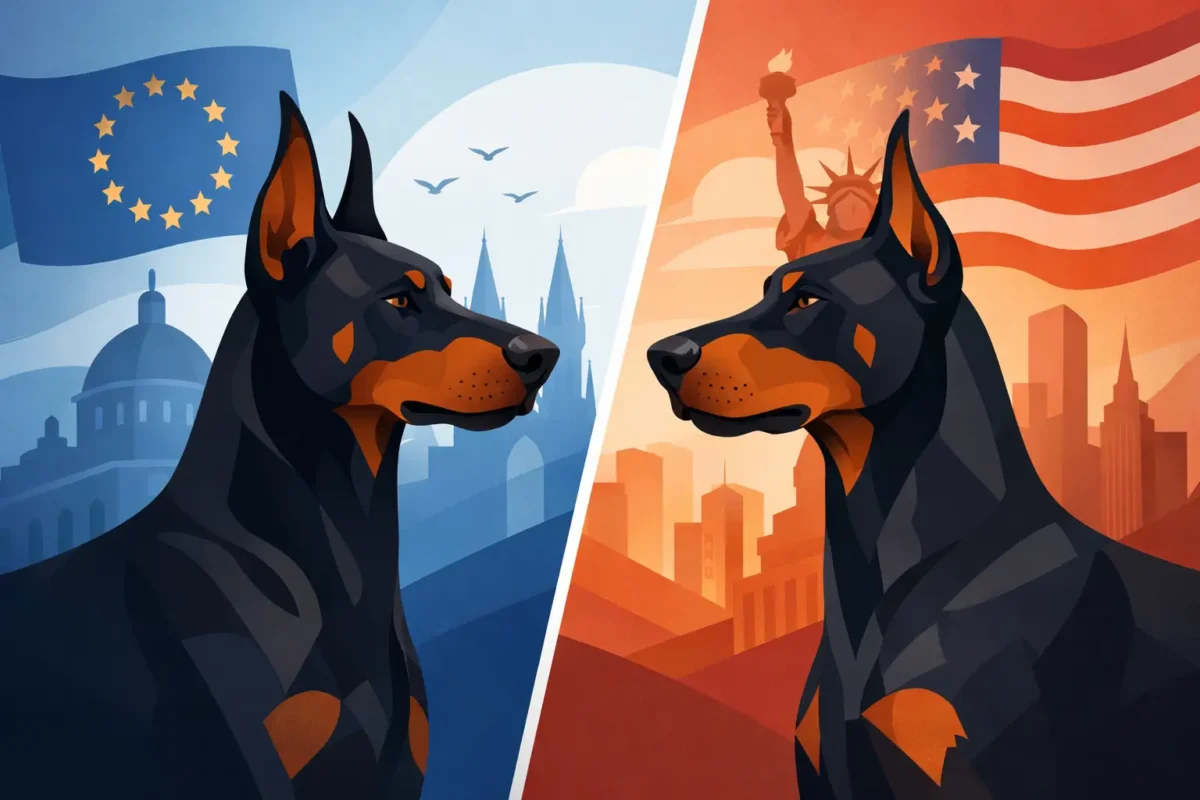
The shortest way to explain european vs american doberman differences is this: American Dobermans are often bred with more emphasis on elegance, outline, and AKC show type, while European Dobermans are often bred with more emphasis on working ability, substance, and a tougher overall build.
That does not mean every American Doberman is soft or every European Doberman is hard-driving. Good breeding still matters far more than labels alone. Bloodline quality, health testing, early socialization, and breeder standards shape the dog in front of you. Still, general patterns do exist, and understanding them helps buyers ask better questions.
Build and appearance
Most people notice the physical differences first. American Dobermans usually have a cleaner, more refined silhouette. They tend to look a bit lighter in frame, with a more elegant neck, a smoother topline, and a slightly more polished show-ring appearance.
European Dobermans often look more substantial. You may see heavier bone, a broader chest, a thicker head, and a stronger overall impression. Many buyers describe them as more powerful-looking, even when both dogs are within breed standard.
Neither look is automatically superior. If you admire a sleek, aristocratic Doberman with a classic AKC presentation, the American style may appeal to you more. If you want a dog that looks more rugged and physically imposing, the European type may be closer to what you have in mind.
Color can also come up in these conversations, but it should not drive your decision. Structure, temperament, and health matter far more than a particular shade or cosmetic preference.
Temperament and daily life
Temperament is where the conversation gets more personal. American Dobermans are often described as more handler-focused, a bit more sensitive, and easier for some families to manage in a companion setting. They are still alert, loyal, and protective, but many settle well into family life when they are bred and raised correctly.
European Dobermans are often described as having stronger working drive, more intensity, and a more demanding personality. That can be a tremendous asset in the right hands. It can also be too much dog for buyers who like the image of a serious protection breed but are not prepared for the training and structure that come with it.
This is where broad labels can mislead people. A stable American-line Doberman can still be highly capable and naturally protective. A well-bred European-line Doberman can still be affectionate, reliable with family, and pleasant in the home. The difference is often in degree, not category.
For households with children, visitors, and a busy family routine, predictability matters. A Doberman should be confident, clear-headed, and properly socialized from the start. Breeding for stable nerves is not optional. It is one of the foundations of responsible Doberman breeding.
Working drive, protection, and trainability
If your interest in european vs american doberman comes from personal protection or working goals, the discussion becomes more specific. European lines are commonly sought by buyers who want stronger prey drive, more natural hardness, and greater stamina for demanding training. In many cases, those lines have closer ties to working evaluations and performance-based breeding priorities.
American lines are often chosen by owners who want a versatile dog with strong obedience potential, a more moderate edge, and a temperament that fits family companionship alongside protection instincts. A good American Doberman should not be timid or weak. The breed was never meant to be that. But some buyers prefer a dog that offers a little more softness and responsiveness in day-to-day handling.
Trainability exists on both sides. Dobermans are intelligent, quick-learning dogs. What changes is often the style of training they need. A higher-drive dog may need more experienced handling, more outlets, and more consistency. A more moderate dog may be easier for a first-time Doberman owner to live with successfully.
That is why honest breeder guidance matters. The right breeder is not trying to sell every puppy to every person. They are trying to place the right puppy in the right home.
Health should come before type
One of the biggest mistakes buyers make is focusing so heavily on European or American type that they ignore health. Dobermans are a magnificent breed, but they are also a breed that demands serious health awareness. Cardiac concerns, genetic risk factors, and overall structural soundness should be part of every conversation.
A beautiful pedigree means very little if the breeder is not serious about screening and long-term breeding decisions. Whether a puppy comes from American lines, European lines, or a thoughtful combination, health testing and family history matter. So do temperament records, longevity in the line, and breeder honesty about strengths and weaknesses.
This is one reason experienced buyers often look past marketing language. “European” can sound impressive. “Champion bloodlines” can sound reassuring. But the real questions are more meaningful. Were the parents health screened? Are the puppies raised in a home environment? Are they socialized early and correctly? Does the breeder understand structure, nerves, and placement? Those answers tell you more than a label alone.
Which type fits your home?
For many US families, the better question is not european vs american doberman in the abstract. It is which Doberman fits your household, your experience level, and your purpose.
If you want a family companion with protective instincts, strong trainability, and a classic AKC style, an American Doberman may be a natural fit. If you want a more substantial dog with stronger working presence and you are prepared for that extra intensity, a European Doberman may be more appealing.
If you are a first-time Doberman owner, do not choose based on internet hype. Choose based on lifestyle. A dog with more drive than you can manage is not more impressive once you are living with it. It is just harder to own well.
If you are an experienced owner, your goals may be more specialized. You may value stronger grips, more working edge, more substance, or a certain pedigree history. In that case, line selection becomes a deeper conversation about breeding priorities, not just geography.
The breeder matters more than the label
This is the part many buyers need to hear. A well-bred Doberman from a breeder who prioritizes health, structure, temperament, and early development is usually a better choice than a poorly bred dog with an appealing label.
The difference shows up in confidence, recovery, nerve, house manners, trainability, and long-term soundness. It shows up in whether your puppy grows into a stable guardian and devoted companion, or into a dog with avoidable physical or behavioral problems.
At Macson’s Doberman, that breeder-first mindset is exactly why careful line selection, health-focused breeding, and structured puppy raising matter so much. Buyers deserve more than claims. They deserve confidence in how their puppy was bred, raised, and matched.
When speaking with any breeder, ask what they are producing and why. Ask how their dogs live, how their puppies are socialized, and what kind of homes their lines do best in. A serious breeder should be able to explain the difference between looks and purpose, and they should not hesitate to discuss trade-offs honestly.
So which should you choose?
Choose the Doberman that fits your real life, not your imagined one. If you want a polished, responsive companion with the hallmark Doberman blend of loyalty, intelligence, and presence, an American-line dog may be exactly right. If you want more substance, more working intensity, and a dog that often asks more from its owner, a European-line dog may be the better match.
Either way, the standard should stay high. Look for sound structure, stable temperament, health-minded breeding, and puppies raised with intention from the very beginning. A Doberman is not just a purchase. It is a commitment to a powerful, deeply loyal breed that gives its whole heart to the right home.
Take your time, ask better questions, and trust the breeder who cares as much about the future of the breed as you care about the puppy you bring home.
