A beautiful Doberman pedigree means very little if the dog behind it is not being evaluated for the conditions that matter most in this breed. When buyers ask what health tests for Dobermans they should look for, they are asking the right question. Health screening is one of the clearest ways to separate careful, purpose-driven breeding from careless production.
For a serious Doberman breeder, testing is not a marketing extra. It is part of protecting the future of the breed. Dobermans are athletic, intelligent, loyal, and deeply devoted to their people, but they also carry known breed risks that responsible breeders cannot afford to ignore. If you want a puppy with the best possible foundation for family life, personal protection, performance work, or the show ring, the health work behind that litter matters.
What health tests for Dobermans should breeders do?
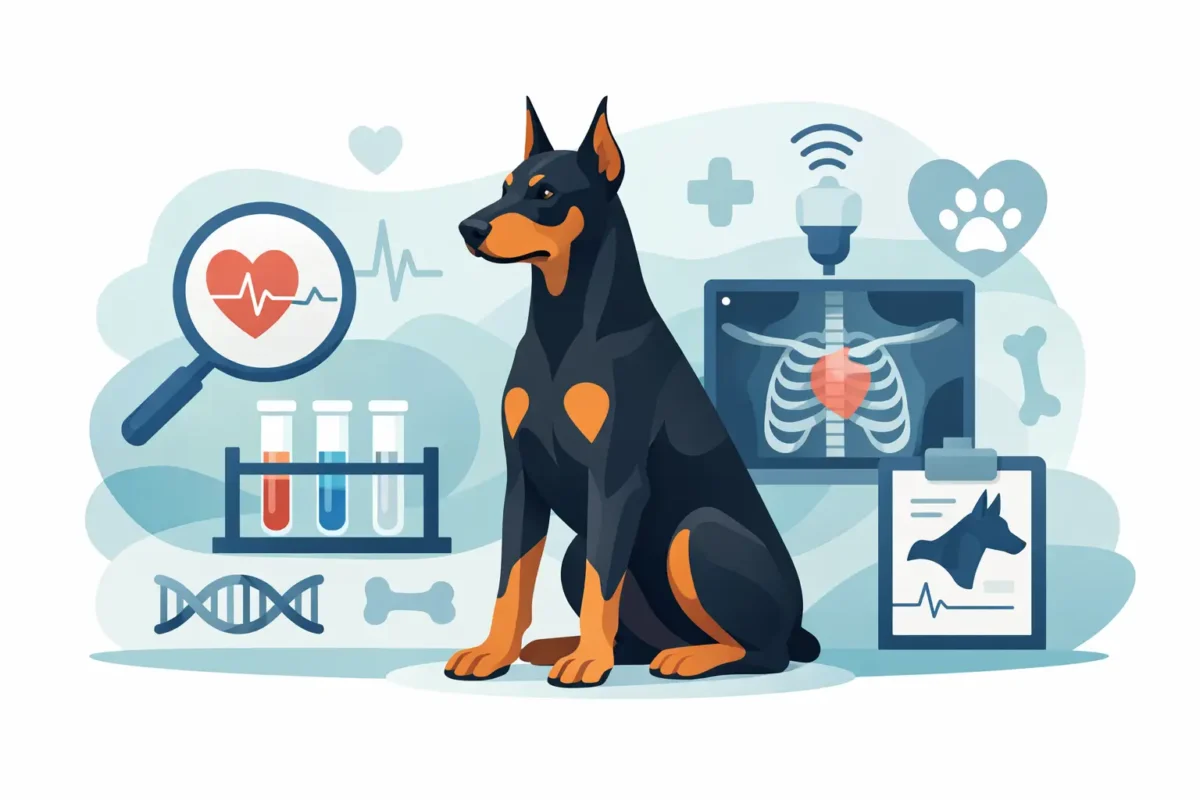
The short answer is that there is no single test that covers everything. A responsible breeding program looks at the heart, hips, thyroid, eyes, liver-related genetic risk, and inherited bleeding disorders at minimum. Some tests are done once through DNA. Others need to be repeated over time because a dog can test normal when young and still develop disease later.
That point is where many buyers get misled. A breeder may say the parents are “vet checked” or “healthy,” but a routine veterinary exam is not the same as breed-specific health screening. Dobermans need more than a quick listen to the chest and a general exam before breeding.
Cardiac testing comes first
If there is one area buyers should pay close attention to, it is the heart. Dobermans are a breed with a known risk for dilated cardiomyopathy, often called DCM. This condition can affect dogs that seem strong, active, and outwardly healthy until signs appear later. In some cases, the first sign is sudden collapse.
That is why serious breeders rely on cardiac screening, not guesswork. The strongest approach usually includes both an echocardiogram and a 24-hour Holter monitor. An echocardiogram evaluates heart structure and function. A Holter records the heart’s rhythm over a full day and helps catch abnormal beats that may not show up during a short office visit.
This is also where timing matters. A one-time normal result in a young dog is helpful, but it is not a lifetime guarantee. Cardiac disease in Dobermans can show up later, so repeat screening in adults is far more meaningful than a single early test.
DNA testing has value, but it is not enough by itself
DNA panels can identify some inherited risks, and they are useful tools in a well-managed breeding program. Dobermans are often tested for von Willebrand disease, which is a clotting disorder, and the DCM-associated genetic variants that are commonly discussed in the breed.
Still, DNA should never be treated as the whole story. A dog can carry risk markers and remain clinically normal for years, or test clear for one mutation and still develop heart disease through other pathways. Genetic testing helps breeders make smarter pairing decisions, but it does not replace real-world cardiac screening.
The core Doberman screenings buyers should ask about
Once the heart has been addressed, buyers should look at the broader health picture. A strong breeding program does not chase one problem while ignoring the rest.
Hips
Dobermans are powerful, athletic dogs, and sound movement matters. Hip evaluation is an important part of breeding for structure and long-term comfort. This is commonly done through formal radiographic review. Good hips do not just matter for working or show homes. They matter for the family dog that will be running, turning, jumping, and aging with your household.
Thyroid
Autoimmune thyroid disease has long been a concern in Dobermans. A proper thyroid panel goes beyond a casual blood draw that says everything looks fine. Breeders who take endocrine health seriously use more complete thyroid testing and monitor breeding dogs as they mature. Thyroid issues can affect coat, energy, fertility, metabolism, and overall condition.
Eyes
Eye certification is another smart layer of screening. While eyes may not be the first issue people associate with Dobermans, a complete breeding program should still include them. Clear eyes support overall breed stewardship and help reduce the chance of passing on avoidable problems.
von Willebrand disease
This inherited bleeding disorder is well known in the breed. DNA testing can identify whether a dog is clear, a carrier, or affected. The practical value here is pairing decisions. A knowledgeable breeder does not need every dog to be genetically identical, but they do need to breed in a way that avoids producing affected puppies.
Liver-related genetic screening
Dobermans can be at risk for issues tied to copper storage and liver health. Genetic screening in this area can add another useful layer when breeders are making long-term decisions. Like other DNA tools, it works best as part of a bigger health strategy rather than a standalone claim.
What health tests for Dobermans mean for puppy buyers
For buyers, the goal is not to become a veterinary specialist overnight. It is to know the difference between meaningful proof and vague reassurance. If a breeder says their dogs are tested, ask what tests were done, when they were done, and whether they can show documentation.
That conversation should feel clear, not evasive. A quality breeder should be comfortable discussing test names, parent results, and the limits of testing. Good breeders do not pretend screening removes all risk. No living bloodline comes with zero uncertainty. What responsible breeders do is stack the odds in the puppy’s favor through careful selection, repeat evaluation, and honest breeding decisions.
This is also why cheap puppies so often become expensive dogs. A low upfront price can hide corners cut on cardiac work, structural evaluation, and genetic planning. Families looking for a devoted companion and loyal protector are usually far better served by a breeder who invests heavily before the litter is ever born.
Red flags to watch for when reviewing health claims
Some warning signs show up quickly if you know what to listen for. One is when a breeder relies only on the phrase “vet checked.” Another is when they mention DNA testing as if it fully replaces Holter monitoring or echocardiograms. A third is when they talk a lot about champion bloodlines but very little about the actual health status of the breeding dogs.
You should also be cautious if testing was done only once at a very young age, or if there is no willingness to provide records. In Dobermans especially, adult follow-up matters. Since some conditions appear later, repeated screening says far more about breeder responsibility than one early normal result.
A trustworthy breeder will also care where the puppy is going. Health testing and placement standards belong together. Stable temperament, proper socialization, and sound structure are part of the same promise. The right Doberman should not only come from tested parents, but also be raised with intention.
Why responsible breeding is more than paperwork
Paperwork matters, but the mindset behind it matters more. The best breeding programs are not looking for a shortcut to produce puppies faster. They are trying to preserve what makes the Doberman special – elegance, intelligence, courage, trainability, and devotion – without being careless about known health risks.
That is the standard serious families should look for. At Macson’s Doberman, that kind of thinking aligns with how quality breeding should be done: limited, intentional, and built around the long-term well-being of the dog, not just the sale. When a breeder values health testing, home rearing, and stable temperament together, buyers get more than a puppy. They get a stronger foundation for the years ahead.
If you are asking what health tests for Dobermans really matter, start with the heart, then look for the full picture. The right breeder will not rush that conversation, because protecting this breed has never been about doing the minimum. It is about doing right by the dog before it ever comes home to you.
